Source anti shrink lined turtleneck men sweater for winter, spring, and autumn
Compare 30 listings of anti shrink lined turtleneck men sweater with options in polyester, cotton, and acrylic blends. View variations in turtleneck, cowl, and crew neck styles suitable for winter and spring seasons.
Key considerations
Products List


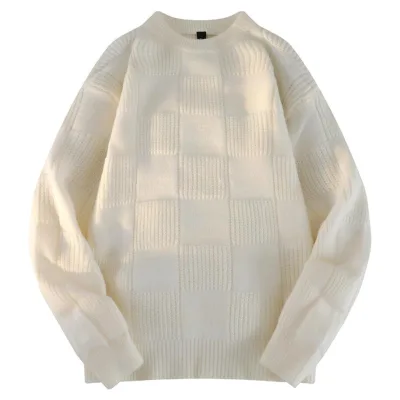


Comprehensive Sourcing Guide
Strategic Sourcing Guide for Anti-Shrink Lined Turtleneck Men Sweaters
Sourcing specialized knitwear such as anti-shrink lined turtleneck men sweaters requires a disciplined approach that balances aesthetic requirements with rigorous technical verification. In the B2B market, the term "anti-shrink" often implies specific fiber blends or finishing treatments designed to maintain garment dimensions after washing. However, buyers must distinguish between marketing claims and verified performance data. This guide outlines the essential steps for evaluating suppliers, interpreting product specifications, and ensuring that the final procurement aligns with quality expectations without relying on unverified assertions.
Understanding Technical Specifications and Material Composition
The foundation of a successful procurement order lies in the precise definition of material composition and construction techniques. For a turtleneck men's sweater, the fabric choice dictates the drape, warmth, and durability. Based on observed market data, materials frequently range from pure Polyester or Cotton blends to Acrylic and Wool/Acrylic combinations. A critical observation in the current supply landscape is the prevalence of Polyester/Cotton blends, which offer a balance of cost and comfort, alongside 100% Cotton options that prioritize natural fiber properties.
When evaluating the "anti-shrink" attribute, buyers should look for specific finishing standards rather than accepting generic labels. Some suppliers list standards such as "100% cotton 300gsm" or "100% Polyester 100-120gsm," which provide concrete data points for weight and density. The GSM (grams per square meter) is a vital metric; a heavier GSM generally indicates a thicker, more substantial garment suitable for winter conditions. Furthermore, the technical construction method, whether Knitted or Crocheted, significantly impacts the final product's elasticity and texture.
The collar style is another non-negotiable specification for this category. The target keyword specifies a "Turtleneck," yet market listings also show variations like Cowl Neck, Crew Neck, and Round Neck. Buyers must ensure the supplier's production line is specifically configured for the Turtleneck style to avoid receiving a different silhouette. Additionally, the sleeve style is typically Long Sleeve for this category, but verification is necessary to confirm the exact cut. The presence of a lining is often implied by the "lined" descriptor in the keyword, though specific data on lining material (e.g., fleece, thermal) may not always be explicitly listed in standard product attributes and requires direct inquiry.
Compliance Standards and Verification Protocols
In the global apparel supply chain, compliance is not merely a formality but a critical risk management tool. While some suppliers may claim adherence to specific standards, buyers must verify these claims against independent testing. Observed data indicates that certain products list "SGS" as a standard, suggesting third-party verification of quality or safety. However, the presence of a certification name does not guarantee that every batch meets the same criteria.
Buyers should be aware that "GOTS" (Global Organic Textile Standard) is often discussed in the context of organic cotton, but its status in specific listings should be treated as background information rather than a confirmed attribute for every item. When sourcing anti-shrink products, the focus should be on dimensional stability tests. Buyers must request test reports that specifically measure shrinkage percentages after multiple wash cycles. Without these reports, the "anti-shrink" claim remains an unverified observation.
Furthermore, packaging standards can serve as a proxy for supplier organization. Some listings specify "1PCS/PP Bag, 50PCS/Carton," while others mention "1 PCS Per Poly Bag. Fit in Box." These variations indicate different levels of packaging sophistication and potential protection during transit. A supplier that adheres to strict packing standards, such as using cartons with defined dimensions (e.g., "26165"), is likely to have better quality control processes in place. Buyers should verify if the supplier's packing standard aligns with their logistics requirements to prevent damage or confusion upon arrival.
Cost Drivers and Pricing Dynamics
The pricing structure for men's sweaters is influenced by a complex interplay of material costs, labor, and order volume. The observed price range in the market spans from $0.99 to $90, a wide spectrum that reflects significant differences in quality, brand positioning, and material composition. A lower price point often correlates with synthetic blends like Acrylic or Polyester, which are cost-effective but may lack the breathability and warmth of natural fibers. Conversely, higher price points may reflect Wool/Acrylic blends or specialized treatments that ensure anti-shrink properties.
Minimum Order Quantity (MOQ) is another critical cost driver. The market data shows an MOQ range from 2 to 500 units. Suppliers with lower MOQs (e.g., 2 units) may cater to small businesses or sampling needs but often charge a premium per unit. Larger orders typically benefit from economies of scale, reducing the per-unit cost. However, buyers must balance the desire for lower prices with the risk of overstocking.
Other factors influencing cost include the origin of the product. Listings indicate origins in Tonglu, Hangzhou, and Nanchang City, Jiangxi Province, China. Different manufacturing hubs may have varying labor costs and supply chain efficiencies. Additionally, the complexity of the design, such as the inclusion of logos or specific patterns (Pure Colour, Patterned, or Logo), can increase production costs. Buyers should request a detailed cost breakdown to understand how much of the price is attributed to materials versus labor and finishing processes.
Typical Applications and Seasonal Relevance
The intended use of the garment dictates the required performance characteristics. The "Winter" season is explicitly mentioned in several product attributes, indicating that these sweaters are designed for cold-weather protection. The "Thickness" attribute further supports this, suggesting that the garments are built to provide insulation. However, some listings also reference "Spring / Autumn," indicating a need for versatility in the product line.
For B2B buyers, understanding the application is crucial for inventory planning. A sweater marketed for winter must have sufficient GSM and insulation properties, while a Spring/Autumn version might prioritize breathability and lighter weight. The "Breathable" and "Eco-Friendly" attributes observed in some listings are particularly relevant for active wear or casual wear applications where comfort is paramount.
The gender specification is clearly defined as "Men," which influences the sizing and cut. Buyers should ensure that the sizing charts provided by the supplier align with the target market's expectations. The "Full" attribute mentioned in some data points may refer to the fit or coverage, which is another factor to consider when selecting the right product for the intended demographic.
Supplier Evaluation and Origin Verification
Evaluating a supplier requires more than just reviewing a product catalog. Buyers should investigate the supplier's location and production capabilities. The data points to specific origins such as Tonglu, Hangzhou, and Nanchang City, Jiangxi Province. These regions are known for textile manufacturing, but the specific factory's capability to produce "lined" and "anti-shrink" garments must be verified.
When assessing a supplier, look for evidence of consistent quality control. The presence of specific product models (e.g., F88C0640, IMN-AW12011, SV0943) suggests a structured production line. However, buyers should not assume that all models meet the same quality standards. It is essential to request samples from different models to compare consistency.
Additionally, the supplier's ability to handle customization is a key differentiator. The "Customization: Available" attribute indicates flexibility, but buyers must clarify the scope of customization. Can the supplier adjust the GSM, change the collar style, or modify the lining material? Understanding the limits of customization helps in setting realistic expectations for the final product.
Quality Control and Long-Term Procurement Strategy
Establishing a robust quality control (QC) process is essential for maintaining brand reputation. Buyers should implement a multi-stage QC approach, including pre-production sample approval, in-line inspection, and final random inspection. For anti-shrink claims, the most critical step is the post-wash test. Buyers must insist on test results that demonstrate the garment's dimensional stability after washing.
Long-term procurement considerations involve building a relationship with a reliable supplier. This includes negotiating favorable payment terms, ensuring consistent lead times, and establishing clear communication channels. The "Lead Time" is a critical factor, though specific values are not provided in the data. Buyers should ask suppliers for realistic lead times based on order volume and complexity.
Finally, buyers should consider the sustainability aspect of their procurement. While "Eco-Friendly" is listed as an attribute for some products, it should be verified through documentation. Sustainable sourcing not only aligns with consumer trends but also mitigates long-term risks associated with regulatory changes. By focusing on verified standards and transparent communication, buyers can secure a supply chain that delivers high-quality, anti-shrink lined turtleneck men sweaters consistently.
Comparative Analysis of Product Attributes
To facilitate decision-making, the following table summarizes key attributes observed in the market data, highlighting the variations buyers must navigate.
| Attribute Category | Observed Variations | Key Verification Points |
|---|---|---|
| Material | Polyester/Cotton, Cotton, Acrylic, Wool/Acrylic, 100% Polyester, 100% Cotton | Verify fiber content percentage and GSM weight. |
| Season | Winter, Spring / Autumn | Confirm suitability for target climate and usage. |
| Collar Style | Turtleneck, Cowl Neck, Crew Neck, Round Neck | Ensure exact match to "Turtleneck" requirement. |
| Pattern | Pure Colour, Patterned, Logo | Check if customization is required for branding. |
| Packing | 1PCS/PP Bag, 50PCS/Carton, Bag, Carton, Fit in Box | Align with logistics and retail display needs. |
| Standard | SGS, 0.3cbm, 100% Polyeter 100-120gsm, 26165, 100% cotton 300gsm | Request specific test reports for shrinkage and safety. |
| Origin | China, Tonglu, Hangzhou, Nanchang City, Jiangxi | Verify factory location and production capacity. |
By systematically analyzing these attributes and cross-referencing them with the specific needs of the procurement project, buyers can make informed decisions that minimize risk and maximize value. The path to successful sourcing lies in rigorous verification, clear communication, and a commitment to quality at every stage of the supply chain.
FAQs
What materials are used for anti shrink lined turtleneck men sweaters?
Materials include Polyester/Cotton blends, 100% Cotton, Acrylic, and Wool/Acrylic combinations. Buyers should verify specific GSM weights like 300gsm for winter thickness or 100-120gsm for lighter options to ensure the garment meets thermal requirements.
Can I find suppliers offering customization for these sweaters?
Yes, customization is available for many listings. Buyers can request specific patterns like Pure Colour, Patterned, or Logo designs, but must confirm if the supplier can adjust collar styles or lining materials to match the exact turtleneck requirement.
Which certifications ensure quality for anti shrink men sweaters?
Some products list SGS as a standard, indicating third-party verification. Buyers must request specific test reports for shrinkage percentages rather than relying on generic labels, as not every listed product automatically satisfies all certification claims.
How does pricing vary for these men's winter sweaters?
Prices range from 0.99 to 90 USD depending on material and order volume. Lower costs often correlate with synthetic blends like Acrylic, while higher prices may reflect Wool/Acrylic blends or specialized anti-shrink finishing treatments.
What are the typical minimum order quantities for these items?
The observed MOQ range spans from 2 to 500 units. Suppliers with lower MOQs cater to sampling needs but may charge higher per-unit costs, whereas larger orders typically benefit from economies of scale in production.
Where are these sweaters typically manufactured?
Products originate from locations such as Tonglu, Hangzhou, and Nanchang City in Jiangxi Province, China. Buyers should verify the specific factory location to ensure it aligns with their logistics and quality control expectations.
How are these sweaters packaged for shipping?
Packaging varies from 1PCS/PP Bag with 50PCS/Carton to 1 PCS Per Poly Bag fitting in a box. Buyers must align these standards with their logistics needs to prevent damage and ensure proper retail display upon arrival.